3. Planning
As indicated in the Framework for Human Health Risk Assessment to Inform Decision Making (USEPA 2014f), the risk assessmentAn organized process used to describe and estimate the likelihood of adverse health outcomes from environmental exposures to chemicals. The four steps are hazard identification, dose-response assessment, exposure assessment, and risk characterization (Commission 1997a). should be “fit for purpose,” should be tailored to the decisions at hand, and should inform the decision-making process (NRC 2009). A thoughtful and thorough planning process defines the scope and technical approach for the risk assessment, develops a CSM to guide the risk assessment, and defines a data collection program. The scope and technical approach of the risk assessment varies based on many factors including regulatory context, the size and setting of the site, the distributionA distribution describes the probability or likelihood of any potential value. of chemicals in environmental media, and information and data needs. The planning process should incorporate input from stakeholdersA stakeholder is anyone who has a “stake” in the development, outcome or decisions made as a result of a risk assessment. A stakeholder can be a person, a group, or an organization that is either affected, potentially affected, or has any interest in the project or in the project’s outcome, either directly or indirectly (Commission1997a; Commission 1997b; NRC 1996; NRC 2009). so that the approach is understood and agreed upon before the site investigation and risk assessment begins.
This chapter provides guidance on key issues associated with planning a risk assessment. The key issues are organized around three general topic areas:
Scoping and Technical Approach
- Identifying Appropriate Support for the Risk Assessment
- Communicating During the Risk Assessment Planning and Implementation Process
- Determining the Regulatory Context
Conceptual Site Model
- Using a Generic or Inadequate CSM
- Incorporating Future Land Uses and Groundwater Uses into the CSM
- Determining Whether to Include Institutional and Engineering Controls or Planned Remedial Action in the CSM
- Identifying Which Sources, Receptors, and Exposure Pathways to Include in the CSM
- Developing the CSM When Limited Information is Known About Historical Site Sources
Data and Information
- Determining the Adequacy of Data and Information for the Risk Assessment
- Determining the Availability of Samples from Site-Specific Exposure Areas
- Assessing Hot Spots
- Determining Whether the Data Set is Representative of the Exposure Areas
- Recognizing Biases in the Data Set that Will Affect Risk Estimates
- Selecting Analytical Parameters
- Addressing Background Concentrations in the Risk Assessment
3.1 Scoping and Technical Approach
Project scoping is critical for risk assessment. During scoping, the appropriate project team should be identified (including agencies, risk assessors, other technical experts, and stakeholders), lines and methods of communication should be established, and the regulatory framework (from statutes through guidance) identified.
3.1.1 Issue – Identifying Appropriate Support for the Risk Assessment
During the planning stage, the appropriate individuals and organizations needed to support the risk assessment and to develop and work toward a common purpose, scope, and technical approach should be identified. This support varies by site and project, but usually includes:
- regulatory agencies (including the regulatory project managerAn individual from a regulatory agency (for example, federal, state, or local), or a consulting company, or responsible party company, who is coordinating the site cleanup including the risk assessment. overseeing the cleanupThe assessment and reduction, removal, or control of chemicals in environmental media. Cleanup is synonymous with other terms such as "corrective action" and "remediation" used in various state, local, and federal programs.)
- responsible parties or remediating parties (including technical project managers representing the responsible parties)
- technical experts (risk assessors and others as needed, including engineers, geologists, chemists, and statisticians)
- risk communicationRisk communication is the formal and informal process of communication among and between regulatory agencies and organizations responsible for site assessment and management, and the various parties who are potentially at risk from or are otherwise interested in the site. experts
- community and other stakeholders (for example, affected community, tribes, public health agencies)
 Read more
Stakeholders may hold differing views on both the definition of the problem and on the list of possible options or problem evaluation methods (Adler and Kranowitz 2005). It is better to discover these differences during project planning than after communicating the risk assessment results. These differences may result from an individual’s risk perception on the basis of fear or feelings of inequality or distrust (see Section 9.2). Disagreements among stakeholders on critical aspects of the risk assessment may also pertain to issues not initially viewed as topics for discussion. Some examples include questions such as:
- Who sets the framework of the assessment? This question may include issues such as administrative site boundaries, sampling and assessment project time frames, and identifying appropriate regulation or guidance. For tribal stakeholders in particular, a parallel governmental structure exists with explicit or implicit rules.
- Who defines the time line for the project? The proposed schedule may not fit the time frame when some stakeholders are available to provide input. Stakeholders may also have a sense of urgency regarding their input that does not meet project management expectations. Where stakeholder involvement is key, deadlines should be set with sufficient time to allow stakeholder engagement and interaction.
- Whose has the power to make or influence decisions in risk managementThe process of identifying, evaluating, selecting, and implementing actions to reduce risk to human health and to ecosystems. The goal of risk management is scientifically sound, cost-effective, integrated actions that reduce or prevent risks while taking into account social, cultural, ethical, political, and legal considerations (Commission 1997a).? Risk management decisions are a balance of costs and benefits of remedial actions. The weighting of costs versus benefits is strongly affected by cultural values and other factors—including whether a stakeholder bears the costs or receives the benefits. But the costs and benefit of a remedial action may seem different to stakeholders who weigh prevention of ecological disturbance and prevention of potential human exposures differently.
Project managers must be aware of issues outside the perceived scope of the risk assessment that may derail project planning and risk communication.
Option – Clarify the Primary Regulatory Agency Jurisdiction
3.1.1.1 Option – Clarify the Primary Regulatory Agency Jurisdiction
For many sites, one regulatory agency clearly has jurisdiction over a particular contaminated site cleanup. In some cases, however, multiple agencies and regulatory programs may have jurisdiction. Where multiple agencies or regulatory programs affect the planning and implementation of the risk assessment, appropriate jurisdiction and regulatory context (applicable statutes, regulations, policies, guidance, and project-specific approaches for a given risk assessment) should be determined and the roles and hierarchy for these agencies be identified. For example, in California, any one of several local, regional, or federal agencies may have jurisdiction on a given site, including USEPA, various California EPA agencies (such as DTSC, OEHHA, Air Resources Board, or RWQCB), county or city health departments, county or city fire departments, and other agencies. Many of these jurisdictions have their own risk assessment guidance, policies, or regulations, or a given jurisdiction may apply federal or state approaches. In some cases, a given governmental entity may not have jurisdiction in a strictly legal sense but may have the ability to influence the approach, methods, and interpretation of the risk assessment. Regardless of the number of agencies and regulatory programs, agree on an agency to take the lead in the oversight of the risk assessment and on the roles and hierarchy for other agencies.
Option – Identify Technical Expert and Resource Availability
3.1.1.2 Option – Identify Technical Expert and Resource Availability
Risk-based programs may require access to technical experts (for example, risk assessors) and appropriate technical resources (for example, modeling software and training). If the appropriate technical expertise or resources are not readily available in-house or readily accessible to a project manager, then outsourcing may be required to adequately staff the project. Private contractors, academia, and USEPA regional and state technical experts may be brought in to support the risk assessment. Many states may lack financial resources necessary to bring in contracted technical experts, but may find support from their USEPA regional offices, a state or federal (for example, ATSDR) public health agency, or other technical resources such as ITRC. Similar technical experts may be brought in representing the different agencies or organizations with varying levels of experience. This diversity of expertise can sometimes lead to power struggles. Identifying roles and responsibilities that include a hierarchy of technical experts helps to reduce power struggles.
Option – Engage all Appropriate Stakeholders
3.1.1.3 Option – Engage all Appropriate Stakeholders
Community and other stakeholder input are important throughout the risk assessment process.
Early involvement of stakeholders often improves the quality of the risk assessment, expedites the risk assessment review, shortens the risk assessment schedule, and lowers the overall level of effort for finalizing the risk assessment. For example, Native American cultural/tribal exposure scenarios and issues are often different than those for the general public, vary by site, and may include unanticipated exposureContact of a receptor with a chemical. Exposure is quantified as the amount of the chemical available at the exchange boundaries of the organism (for example, skin, lungs, gut) and available for absorption (USEPA 1989a). media (for example, specific plants), exposure rates, and exposure pathways (for example, ceremonial use). Early involvement helps to identify site-specific exposure media, exposure points, receptorAn individual (for example, residential adult, residential child, worker, trespasser, or recreator) who has the potential to be exposed to a chemical in environmental media. groups, exposure pathways, and data gapsMissing data or information needed to answer questions or allow a more refined analysis to be completed. that can be addressed during data collection and risk assessment. Stakeholders are also more engaged when they are part of the planning and review stages of the risk assessment. Community engagement during the planning stage demonstrates the commitment to addressing their interests and potential exposures.
Experience shows that decisions that are made during the risk assessment process in collaboration with stakeholders are more effective and durable. Stakeholders bring to the table important information, expertise, and knowledge that may increase the accuracy of the risk estimates (for example, a hill in the study area is often used by children for games). Additionally, stakeholders are more likely to accept the implementation of a risk management decision that they participated in shaping (Commission 1997a; Commission 1997b).
3.1.2 Issue – Communicating During the Risk Assessment Planning and Implementation Process
Risk assessment requires ongoing communication between all key players (regulators, responsible parties, environmental consultants, and other stakeholders) to achieve a common goal. Failure to properly communicate can result in incomplete or inappropriate data collection, misinterpretation of results, disagreement over the conclusions of the risk assessment, or rejection of the risk assessment by the regulatory agency.
Option – Establish a Defined and Clear Communication Process
3.1.2.1 Option – Establish a Defined and Clear Communication Process
A clear process of communication and information sharing should include intra- and inter-disciplinary communications, technical to management communications, and communications to decision makers. Communicating with the community and other stakeholders throughout the process allows their input to be solicited and considered (see Chapter 9 for a discussion of risk communication).
Option – Engage Stakeholders
3.1.2.2 Option – Engage Stakeholders
Keeping stakeholders engaged throughout the risk assessment process helps achieve a consensus outcome for the risk assessment. Communication between stakeholders supports clarity, transparency, and ultimately acceptance of the risk assessment outcome. Engagement begins with involving all stakeholders prior to initiating the risk assessment (and ideally before any field work is conducted) in defining roles and responsibilities and developing the purpose, scope, and technical approach of the risk assessment.
Inadequate coordination and communications among the disciplines involved in site cleanup can result in a rift between risk assessment and risk management because of the common perception that risk assessment should be completely separated from risk management. Agencies, however, often achieve successful integration between risk assessment and risk management. (Sedman, Reynolds, and Hadley 1992) present several examples of the successful integration of risk assessment and risk management functions. In addition to establishing clearer understandings and agreements about quantitative sampling objectives, which is where site characterization and risk assessment may overlap, risk assessors must be involved throughout the site cleanup process. Previous ITRC guidance recommends that all key players be identified up front, that they communicate and agree upon a common framework, and that the risk assessment process be iterative and modified as appropriate as new information becomes available. This process is necessary in order to achieve the best risk assessment and risk management possible (ITRC 2008).
3.1.3 Issue – Determining the Regulatory Context
In any particular regulatory jurisdiction, regulatory direction may range from a clear authoritative direction to none at all, with many projects falling somewhere in between. Sometimes the applicable requirements are clearly spelled out in statutes or regulations so that closely following these requirements achieves the needed risk assessment. In jurisdictions where the requirements are less clear, professional judgmentDecisions made based on knowledge gained through education and experience. must be used to achieve a risk assessment that is technically sound, coherent, and consistent with requirements.
Typically there are hierarchies of requirements on any project. Risk assessment generally follows the hierarchy triangle presented in Figure 3-1.
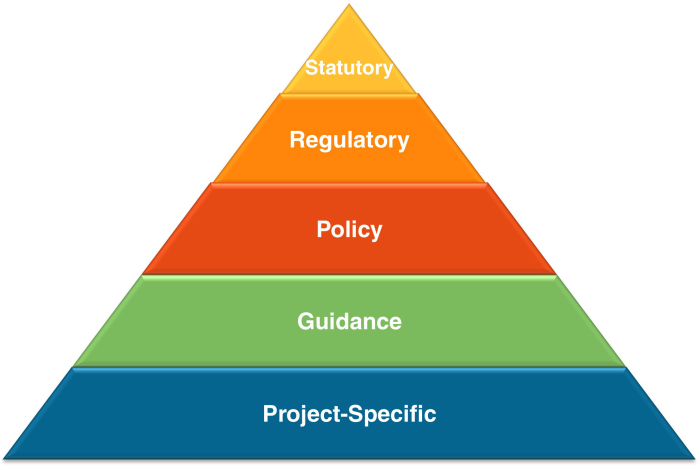
Figure 3-1. Regulatory context hierarchy.
Read more
In addition to the various levels of hierarchy that may be associated with a particular risk assessment, there may also be multiple jurisdictions (federal, state, local) each applying their hierarchy separately. Within this often complex set of requirements, multiple stakeholders may want additional social, environmental, or economic issues to be addressed in the risk assessment. A project manager should consider all of these issues in performing the risk assessment.
The laws, statutes, and regulations have the force of law, whereas policies and guidance are recommendations. Regulations may be the key driver in the risk process and can be either generic or specific (for example, specific exposure scenarios to consider, the toxicity valuesDerived values (for example, reference doses and slope factors) that can be used to estimate the incidence or potential for adverse human health effects in receptor (USEPA 2015h). to be used). Although legislative statutes and regulations carry more authority, they often lack the detail necessary to prepare a risk assessment.
Project-specific judgment (at the bottom of the pyramid) is generated as a result of the regulatory project manager’s decisions on a specific site. The project manager may or may not have specific directives from legislation, regulation, and guidance that should be followed. Even if specific requirements are in place, there is often room for interpretation or site-specific conditions present that allow project-specific adjustments. If no requirements or only vague requirements exist, then project managers may need to use professional judgment on what may be allowed on a project. When using professional judgment, decisions should be based on data pertinent to the specific circumstances, rather than on personal opinions.
Option – Review Agency-Approved Work Plan, if Available
3.1.3.1 Option – Review Agency-Approved Work Plan, if Available
In some cases, regulatory requirements define the scope and contents that must be included in a work plan for the risk assessment; in other cases, a project-specific work plan is prepared and approved by the regulatory agency prior to preparation of the risk assessment. Where a project -specific work plan is prepared and approved, the scope and contents of the risk assessment should be compared to the agency-approved work plan in order to determine whether the risk assessment meets agency requirements. This approach, however, assumes that the agency staff that reviewed and approved the work plan were aware of the correct agency requirements, that agency requirements have not changed since the work plan was approved, and that the work plan was adequately detailed. The scope and level of detail presented in a risk assessment work plan can vary widely depending on the agency and can range from a brief overview of the major steps of the risk assessment process to detailed information on data groupings, exposure scenarios, models, input assumptions, and toxicity values to be used. In the absence of state-specific requirements for risk assessment content and reporting format, one resource to use is Risk Assessment Guidance for Superfund Part D (USEPA 2001b).
An iterative process can be used to modify/update the risk assessment scope presented in the work plan. When the risk assessment scope is prepared prior to data collection, it may be appropriate to later modify the scope based on findings of the site investigation and updates to the CSM.
3.2 Conceptual Site Model
The CSM describes the potential chemical sources, release mechanisms, fate and transport pathways, affected environmental media, receptors, and exposure pathways for current and reasonably anticipated activities and land uses. This model documents current site conditions and conceptualizes the relationship between sources and receptors by considering potential or actual migration and exposure pathways (ITRC 2013). The CSM assists in organizing the risk assessment, identifying uncertainties and data gaps, and focusing data collection efforts.
Read more
The CSM is a working model that is refined and updated throughout the risk assessment as additional information and data are obtained that changes the understanding of site conditions or exposure scenarios. Changes may be based on information such as previously unidentified chemicals in environmental media or exposure media, screening results using risk-based concentrations and background data, and new information concerning potential activities and land uses. In addition, the CSM should be finalized during preparation of the risk assessment and included in the “Exposure Assessment” discussion of the risk assessment.
The presentation of the CSM is the basis for understanding the risk assessment process. A CSM presented in text format and accompanied by supporting diagrams or flow charts is generally the most useful. An example diagram from ITRC (2012a) is presented in Figure 3-2 and a flowchart CSM in Figure 3-3. In addition, the U.S. Navy offers guidance (2014a) that can be used for CSM development. Other example CSMs are provided in the USEPA RSL User’s Guide (USEPA 2014e) and USACE’s Conceptual Site Models (USACE 2012).
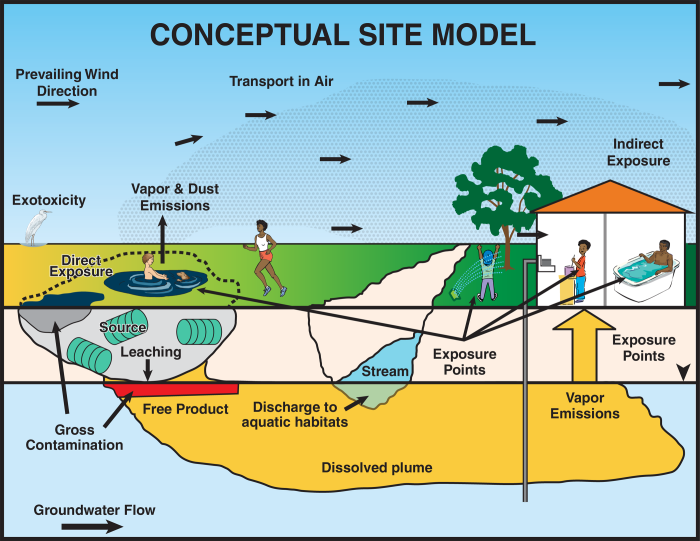
Figure 3-2. Example CSM.
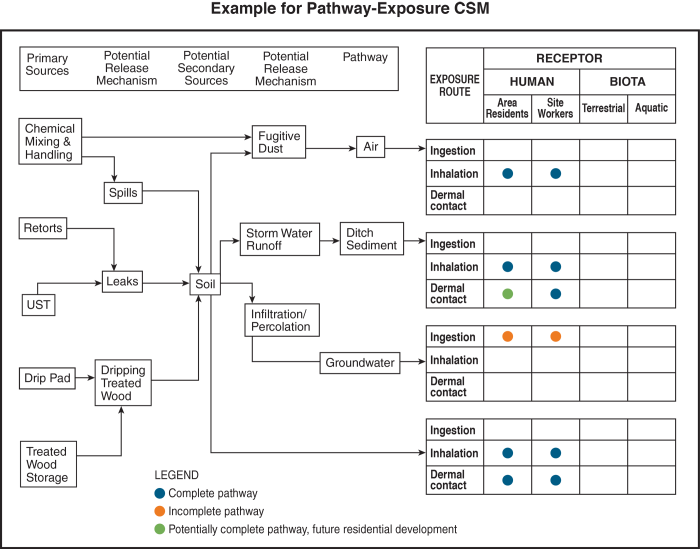
Figure 3-3. Example pathway-exposure CSM.
Source: Appendix A1, DTSC 2008.
3.2.1 Issue – Using a Generic or Inadequate CSM
An inadequate CSM can result in collecting unnecessary or inadequate data or can have a negative effect on the risk assessments by not evaluating potential risks for all relevant receptors and exposure pathways.
Option – Prepare and Refine a Site-Specific CSM
3.2.1.1 Option – Prepare and Refine a Site-Specific CSM
The CSM is a dynamic element of the site investigation and the risk assessment process. The CSM may start out with a generic framework; however, as more information becomes available the CSM can be refined so as to better support decision making. In order to best support the development of an effective risk assessment, the CSM should be tailored to the circumstances and conditions at each particular site, rather than to a generic site or based on boilerplate language copied from other reports. An effective CSM can help to define overall project objectives and establish stakeholder agreement on key issues (including risk assessment scope and data needs), thus minimizing significant revisions or significant data gaps during stakeholder review of the risk assessment. All stakeholders should agree on the CSM before the project moves forward. In some cases, discussions with technical experts may be necessary to explain certain aspects of the CSM so that the entire team can reach consensus.
The CSM includes known and suspected sources of chemicals in environmental media, types of chemicals, affected environmental media, known and potential routes of migration, and known or potential human receptors (USEPA 1988a). The model incorporates available information regarding current and historical activities at the site, known or suspected chemicals in environmental media, current and reasonably anticipated future on-site and nearby off-site activity and land use, resources and their locations (for example, wetlands, water supply wells), populations (for example, residents, schools, hospitals), and physical and geological features (for example, groundwater hydrology, soil type, vegetation).
3.2.2 Issue – Incorporating Future Land Uses and Groundwater Uses into the CSM
Current and potential future exposure pathways are important components of the risk assessment. A site and its surroundings may be used for specific purposes today (such as commercial/industrial land use), but could change to other more sensitive land uses (such as residential) in the future. For example, groundwater may not be used for municipal, industrial, or agricultural uses today, but it may be designated for such uses in the future.
Option – Consider Unrestricted Use
3.2.2.1 Option – Consider Unrestricted Use
An unrestricted use exposure scenarioA set of facts, data, assumptions, and professional judgment about how an exposure occurs or does not occur. An exposure scenario addresses the (1) chemicals in environmental media and their sources; (2) exposed populations (or receptors); (3) migration of chemicals in environmental media from sources to receptors; and (4) routes of exposure (ingestion, dermal contact, inhalation). (for example, residential) may be evaluated when the future site use is uncertain and a residential scenario is reasonably anticipated. This scenario can also be used to provide the scientific basis for possible restrictions on the land and groundwater use even when the future use is known. In this case, an unrestricted use evaluation can identify the chemicals and media warranting remedial action, in addition to those warranted for a reasonably anticipated alternative (other than residential) future land use and groundwater use. This information can be used to identify the incremental effort and investment needed to provide protection of human health for alternate future land uses. An unrestricted use scenario is not always a reasonable assumption. In some situations residential land use is not possible or not a realistic future site use (for example, at Department of Defense munitions sites with exclusions zones, within wetlands, and where physical features such as steep hillsides practically eliminate the likelihood).
In some cases, residential land use is not the most conservative land use evaluation for a risk assessment. For example, if bioaccumulative chemicals are present in soil and agricultural use of the land is possible, then an agricultural scenario may yield more conservative results than a residential scenario.
Option – Consider Reasonably Anticipated Future Land Use and Groundwater Use
3.2.2.2 Option – Consider Reasonably Anticipated Future Land Use and Groundwater Use
When the current or reasonably anticipated future land use is other than residential, known existing exposure scenarios (for example, for workers who are currently employed at the property) and reasonably anticipated future exposure scenarios may be evaluated. Consider future land and groundwater use to determine the types of exposures that should be evaluated in a risk assessment and the frequency of exposures to any residual chemical concentrations that may occur. The evaluation of future land and groundwater use may be based on specific knowledge of the future use, such as when a property owner intends to maintain the current use or when future use decisions have been made and documented (for example, municipal zoning and planning ordinances).
Developing assumptions regarding reasonably anticipated future land and groundwater use can be challenging. A systematic process can be used to identify the reasonably anticipated future land and groundwater use for the site and adjacent properties. In some cases, the future land use may be determined by conducting a reuse assessment, which includes collecting and evaluating information to develop assumptions about reasonably anticipated future land use (USEPA 2001b).
Determining reasonably anticipated future land use should not be an “extensive, independent research project” (USEPA 1995c). Existing information can be used, much of which is available from local land use and land planning authorities (USEPA 1995c). The USEPA guidance can be used as a framework for identifying future land use (USEPA 1995c) and (USEPA 2001b). Sources of helpful information may include:
- current land use
- zoning laws and maps
- community master plans or development plans
- relevant chemical data
- population growth patterns and projections
- existing institutional controlsNon-engineered instruments that help minimize the potential for human exposure to contamination and/or protect the integrity of the remedy (USEPA 2001c). Examples include deed restrictions on land use, groundwater use restrictions, and city ordinances prohibiting private well installations. The use of these controls typically require a specific mechanism for placing the restriction and future compliance with the restriction. The timing of the decision to use an institutional control, as well as, the specific mechanism to be used may be based on criteria outlined in statute, regulation, policy or guidance.
- current land use in close proximity to the site
- wellhead protection information
- comprehensive groundwater protection plans
- historical or recent development patterns
- cultural factors (for example, Native American religious sites and historic sites)
This information, combined with interaction with stakeholders, increases the certainty of assumptions about reasonably anticipated future activity and land use, and thus increases the usefulness of the risk assessment.
3.2.3 Issue – Determining Whether to Include Institutional and Engineering Controls or Planned Remedial Action in the CSM
Typically, a baseline risk assessment is prepared for a site. Baseline risks are defined in Risk Assessment Guidance for Superfund (USEPA 1989a) as “risks that might exist if no remediation or institutional controls were applied at a site.” Risk assessment, however, is often used as a tool to evaluate situations beyond baseline risks, such as residual exposure scenarios and concentrations remaining after a planned remedial action, or residual risks remaining after implementing a specific institutional control (for example, prohibiting residential land use).
When a baseline risk assessment is not prepared, an issue that is often encountered during the risk assessment planning process is whether to incorporate existing or planned institutional controls, engineering controlsEngineered and constructed physical barriers to contain, prevent, or mitigate exposure to chemicals in an environmental medium. Examples of engineering controls include engineered caps and subslab depressurization systems, mitigation barriers, and fences. Similar to activity and land use restrictions, engineering controls also typically require a specific mechanism for noticing the presence of engineering control and related restrictions, as well as long-term maintenance and management of the control. The timing of a decision to use an engineering control, and the specific mechanism to be used, may be based on criteria outlined in statute, regulation, policy, or guidance., or planned remedial action into the risk assessment as part of the development of the CSM.
Read more
USEPA defines institutional controls as non-engineered instruments, such as administrative and legal controls, that minimize the potential for exposure to chemicals in environmental media or protect the integrity of a response action (USEPA 2012d). The USEPA’s Institutional Controls: A Guide to Planning, Implementing, Maintaining, and Enforcing Institutional Controls at Contaminated Sites (USEPA 2012d) provides detailed information on the key activities of the life cycle for institutional controls, including planning, implementation, maintenance, enforcement, and termination. Regardless of whether or not institutional controls, engineering controls, or planned remedial action are incorporated as part of the risk assessment, the mechanism for how they are maintained and enforced after the corrective action is complete is crucial for long-term protectiveness of the site.
Effective Engineering and Institutional Controls: The Love Canal Site
From 1942 to 1953, the Hooker Chemical company drained a former canal, lined it with clay, and used it to dispose of over 21,000 tons of toxic waste in capped cells. In 1953, the site was sold to the local school district, which had insisted on buying the property to build a school even though Hooker Chemical had warned the district about the buried waste.
Over the next several years, an elementary school and several single-family homes were built around the site. During the installation of sewers for these neighborhoods, the clay walls and cap that had contained the toxic waste were damaged, allowing groundwater and rainwater to move the waste into the neighborhood (for example, seeping into basements). The lack of clear communication about the presence of institutional and engineering controls at this site resulted in the evacuation of over 900 families, prompting the 1980 Superfund law.
Sources: USEPA 2015d and USEPA 2012f
Option – Incorporate Institutional Controls, Engineering Controls, and Planned Remedial Action in the CSM
3.2.3.1 Option – Incorporate Institutional Controls, Engineering Controls, and Planned Remedial Action in the CSM
Incorporating existing or planned institutional controls, engineering controls, or planned remedial action allows streamlining of the risk assessment effort. This practice maintains focus on evaluating current and future exposure scenarios to assess whether additional actions are needed (on the basis of risk) beyond the controls already in place or planned. The USEPA guidance notes that a risk assessment should address current and reasonably foreseeable exposure scenarios rather than worst-case exposure scenarios. By doing so, the level of effort for the risk assessment is tailored to the site-specific issues and questions to be answered using risk assessment as a decision-making tool. The institutional and engineering controls can be used as a single action or part of a group of actions to render the exposure pathwayThe course a chemical takes from a source to a receptor. An exposure pathway describes a unique mechanism by which an individual or population is exposed to chemicals at or originating from a site. Each exposure pathway includes a source or release from a source, an exposure point, and an exposure route. If the exposure point differs from the source, a transport/exposure medium (for example, air) or media (in cases of intermedia transfer) also is included (USEPA 1989a). incomplete.
During the risk assessment planning process, incorporation of existing or planned institutional controls, engineering controls, or planned remedial action into the risk assessment should be confirmed with stakeholders. While planned institutional or engineering controls are important in determining reasonably anticipated future land use, the risk assessment should clearly communicate assumptions that rely on planned engineering controls, institutional controls, or remedial actions to eliminate certain land or groundwater use scenarios. The risk assessment should also, to the extent possible, assess how reliable controlling mechanisms will be in restricting land use in the future (USEPA 1995c); also see information regarding the Uniform Environmental Covenants Act (Kerr 2006). This assessment is critical because human health may not be protected if land use in the future does not reflect what was assumed in the risk management decision-making process.
At sites where risk-based justification of institutional controls, engineering controls, or interim remedial actions is needed, the risk assessment may not provide this information if the exposure scenarios are not quantified. Also, if existing controls are incorporated into the risk assessment, exposure scenarios excluded from the CSM that may ultimately be determined to be associated with acceptable risk (for example, site conditions may have improved and the restriction may no longer be needed), may not be evaluated. In addition, incorporating institutional controls and engineering controls may not identify land uses that may require only limited additional remedial action to achieve acceptable risk levels.
Option – Do Not Consider Institutional Controls, Engineering Controls, and Planned Remedial Action in the CSM
3.2.3.2 Option – Do Not Consider Institutional Controls, Engineering Controls, and Planned Remedial Action in the CSM
Conducting the risk assessment without incorporating institutional controls, engineering controls, and planned remedial action allows these controls or actions to be evaluated as part of the remedial action decision process. In some cases, institutional controls and engineering controls are viewed as remedial action and require specific mechanisms or actions that are appropriately conducted as part of the remedial action implementation process. When chemicals are persistent in environmental media, the effectiveness of institutional controls in mitigating exposure is less certain because of the time required (over 20 years) for these controls. In other cases, the responsible party or current landowner may not be able to ensure that institutional or engineering controls will be instituted and maintained. These cases are particularly problematic when future land use cannot be easily determined or the responsible party and landowner are not the same entity.
When a risk assessment is conducted without incorporating the existing institutional controls or engineering controls, an overly conservative site risk results and may lead to more extensive remedial action measures than are needed.
3.2.4 Issue –Identifying Which Sources, Receptors, and Exposure Pathways to Include in the CSM
Several questions can help to determine whether a receptor may realistically be exposed to a chemical in an environmental mediumSoil, surface water, groundwater, indoor air, outdoor air, sediment, and other parts of the environment that may be impacted by the release of a chemical.:
- What receptors and exposure pathways have been identified for the site?
- Will the environmental conditions support a complete exposure pathway (for instance, snow cover prevents surface soil exposure or windblown soil changes the exposure areaA geographic area over which a receptor is reasonably assumed to move at random and equally likely to come into contact with an environmental medium (for example, soil) both spatially and temporally. An exposure area is further defined on the basis of observed or assumed patterns of receptor behavior, historic activity, and the nature and extent of chemicals in environmental media (USEPA1989a). An exposure area may also be called an exposure unit.)?
- Are the concentrations of a chemical in the soil too deep for ingestion or dermal exposure to occur? At what soil depth would the receptor likely be exposed?
- Do chemicals in the subsurface soil present an indoor or outdoor vapor inhalation risk?
- Are there concentrations of a chemical in soil that might eventually affect groundwater or surface water?
- Is groundwater in connection with surface water?
- Is groundwater or surface water used as a drinking water source?
- Is surface water used for recreation or any other purposes that result in a human exposure?
- Are foods (for example, fish, game, vegetation) consumed by receptors grown or present on or near the site?
The answer to these and similar questions requires an understanding of the site and its history, including patterns of land use (current or planned use of the property) and site conditions (classification of groundwater, nature of the soil and its potential for sustaining crops, grain size, and likely wind speed to generate dust).
Option – Consider All Exposure Pathways in the CSM
3.2.4.1 Option – Consider All Exposure Pathways in the CSM
While potentially complete exposure pathways are the focus of the risk assessment (see Section 3.2.4.3), it may be helpful to discuss incomplete exposure pathways in the CSM for documentation purposes, including any unique or site-specific exposure scenarios (see Section 3.2.4.2). If questions arise later regarding why certain environmental media, exposure pathways, and receptors were not included in the risk assessment, then this documentation will explain the exclusion of these items. In the presentation of results, incomplete exposure pathways can be graphically differentiated from potentially complete or complete exposure pathways.
Option – Incorporate Unique and Site-Specific Exposure Scenarios
3.2.4.2 Option – Incorporate Unique and Site-Specific Exposure Scenarios
For some sites, unique or site-specific exposure scenarios may need to be considered while performing an exposure assessmentThe determination or estimation (qualitative or quantitative) of the magnitude, frequency, duration, and route of exposure (USEPA 1989a).. Such scenarios may include consumption of homegrown produce; consumption of game animals (for example, deer, wild turkey, and fish); and residential nonpotable groundwater use exposures (for example, using groundwater in a swimming pool). These exposure scenarios can result in significantly more exposure (chemical intake) than assumed in typical default exposure scenarios (such as residential direct contact with soil or maintenance worker contact with groundwater). Failing to consider site-specific exposure scenarios may lead to unreliable risk assessment conclusions and thus inadequate risk management actions.
Option – Consider Only the Potentially Complete Exposure Pathways in the CSM
3.2.4.3 Option – Consider Only the Potentially Complete Exposure Pathways in the CSM
The risk assessment typically focuses on complete exposure pathways. With this focus, the exposure pathways included in the CSM may only be those that are determined to be complete or potentially complete based on the available information. In many cases, determining whether an exposure pathway is complete depends on the presence and location of an exposure mediumEnvironmental medium containing concentrations of a chemical that may be contacted by a receptor.. It is best to include potentially complete exposure pathways until adequate data is collected to eliminate pathways from the CSM.
Regulatory agencies vary as to whether an environmental medium is considered an exposure medium; for example, agencies differ in their definitions of surface soil and subsurface soil. Some regulatory agencies consider surface soil to be near surface or approximately the first few inches where an individual may come in contact with soil. Others may define surface soil to include the top two or three feet. In many cases, exposure media may be defined by statute, regulation, policy, or guidance, but it may also be determined as part of the planning process based on the current and reasonably anticipated future activity and land use. Exposure media may also be related to cultural or other activities unique to a site. For example, Native Americans who use clay for pottery may be exposed to chemicals in soil at varying depths, depending on where and how the clay is obtained.
The approach taken to identify receptors and define their specific activities on a site may vary based on the site and the type of activity. For example, it may be appropriate to address potential construction worker exposure through the use of Health and Safety Plans or other Occupational Safety and Health Administration (OSHA) criteria. Construction worker exposure may not need to be quantitatively evaluated if these risk management procedures are implemented. Certain sensitive receptors may require site-specific considerations.
Option – Consider Hypothetical Exposure Pathways in the CSM
3.2.4.4 Option – Consider Hypothetical Exposure Pathways in the CSM
In addition to the reasonably anticipated future exposure pathways, it may be helpful to assess the property for unrestricted use, which typically involves evaluating a residential land use scenario. In the remedial action stage, this evaluation may provide information that allows the responsible party and agency to identify the relative differences in remedial actions between the reasonably anticipated use and unrestricted use scenarios.
3.2.5 Issue – Developing the CSM When Limited Information is Known about Historical Site Sources
Knowledge of site history and potential sources of chemicals in environmental media is critical in determining how best to interpret sampling data to evaluate exposure. For example, estimating exposure concentrations from data collected in an area where a limited spill occurred may be substantially different from estimating exposure concentrations from data collected within environmental media affected by a large-scale, ubiquitous release (for example, historical fill, former apple orchard). A proper understanding of the source of chemicals in environmental media and their environmental fate and transport are important in the development of a risk assessment.
Primary chemical sources indicate where the chemicals in environmental media may have originated. These sources are site specific, but examples may include tanks/drums, waste lagoons, underground piping, emission stacks, and fugitive emissions. Both known and suspected sources of chemicals in environmental media are identified in the CSM. The evaluation of the exposure pathways may be addressed during data collection activities to determine whether chemicals are present in environmental media as a result of these historical sources.
Option – Start with the Affected Media
3.2.5.1 Option – Start with the Affected Media
When the original sources of chemicals are unknown, the CSM can start with environmental media that are known or suspected to have been affected by the original source and thus serve as both potential exposure media and secondary sources of chemicals. The secondary chemical sources can be represented by the environmental medium affected by a release. Examples include surface soil, subsurface soil, air, sediment, and surface water.
Option – Search for Additional Site Information
3.2.5.2 Option – Search for Additional Site Information
Historical site information and data can be used to learn about the potential sources at the site. This information may include site use, chemical storage and usage, geographic and topographic info, aerial photos, soil type, land records, Sanborn maps, as-built drawings, and community input. The site history helps to identify the primary and secondary chemical sources, the chemicals in environmental media, and potential exposure media. In some cases, this information can be obtained from a Phase I environmental site assessment or from the results of an appropriate inquiry.
3.3 Data Collection Program
Throughout the project life cycle, systematic planningA planning process that is based on the scientific method. It is a common-sense approach designed to ensure that the level of detail in planning is commensurate with the importance and intended use of the data, as well as the available resources. Systematic planning is important to the successful execution of all activities at hazardous waste sites, but it is particularly important to dynamic field activities because those activities rely on rapid decision-making. The data quality objective (DQO) process is one formalized process of systematic planning. All dynamic field activities must be designed through the use of systematic planning, whether using DQO steps or some other system. See also Data Quality Objective (USEPA 2015h). should form the basis for collection and analysis of site data; see Section 3.0 of Groundwater Statistics and Monitoring Compliance Statistical Tools for the Project Life Cycle (ITRC 2013). The project planning team defines the data quality objectives (DQOs)The qualitative and quantitative statements derived for the DQO process that clarify the study’s technical and quality objectives, define the appropriate type of data, and specify tolerable levels of potential decision errors that will be used as the basis for establishing the quality and quantity (USEPA 2006). and then determines the appropriate type and quality of data needed to answer questions of interest.
As discussed in the ITRC (2013) guidance, systematic planning results in clear data collection plans and objectives. The USEPA DQO process (USEPA 2006c) and the U.S. Army Corps of Engineers (USACE) technical project planning (TPP) process (USACE 1998) are two examples of systematic planning that can readily be used to plan data collection. Additional information on systematic planning can be obtained from the following ITRC documents:
- Improving Environmental Site Remediation through Performance-Based Environmental Management (ITRC 2007a)
- Technical and Regulatory Guidance for the Triad Approach: A New Paradigm for Environmental Project Management (ITRC 2003)
- Triad Implementation Guide (ITRC 2007b)
- Incremental Sampling Methodology (ITRC 2012a)
The CSM is an integral part of the development of data collection programs and “serves as a systematic planning instrument, a communication device, and an optimization and decision support tool” throughout the site investigation and risk assessment process (U.S. Navy 2014b). The CSM helps identify and focus the risk assessment on site decisions to be made throughout data planning, data collection, and risk assessment. The U.S. Navy provides a tool to assist in developing a CSM (U.S. Navy 2014a).
3.3.1 Issue – Determining the Adequacy of Data and Information for the Risk Assessment
The risk assessment data needs should be considered during the planning process. When a risk assessment is prepared, the site assessment information and data set should not be assumed to be acceptable for the risk assessment. For example, without risk assessor input, the available data may be collected from locations that are not pathways to site receptors or may be missing from critical exposure media. Rather, data needs for the risk assessment should be specifically identified. This input helps to determine the quantity and quality of data, sampling locations, and types of samples needed for the risk assessment. Identification of data needs for the risk assessment is an iterative process; as field data are collected and reviewed and the CSM is refined, additional data needs may be identified for the risk assessment. Engage risk assessors early in the project planning phase and keep them engaged during the iterative data collection and review process.
Option – Incorporating Risk Assessment Data Needs During the Planning Process
3.3.1.1 Option – Incorporating Risk Assessment Data Needs During the Planning Process
Incorporating risk assessment data needs into the field investigation minimizes data gaps for conducting the risk assessment and costly additional data collection efforts. The data collection programs must define the type of data that will be collected, the quantity of data, and level of quality that the data must achieve to support and defend environmental decisions. The data collection programs can be scaled based on site-specific conditions (for example, the size of the site, the number of environmental media, the number of samples to be collected, the project scope, and the available budget).
Option – Identify DQOs
3.3.1.2 Option – Identify DQOs
The DQO process described in USEPA guidance documents such as Guidance on Systematic Planning Using the Data Quality Objectives Process (USEPA 2006c), provides information to support the development of data collection programs and the evaluation of site data to decide whether the data are usable in the risk assessment. This process is iterative and flexible. As information is developed, the elements of the process can be reevaluated and revised to account for new information.
3.3.2 Issue – Determining the Availability of Samples from Site-Specific Exposure Areas
Sample collection and analysis is expensive, and thus few samples may be collected to represent a large area of the site. The result of this practice is that the calculated exposure concentrations may be biased low by averaging the sample set from too large an area. Conversely, the calculated exposure concentration may be biased high if the sample set is representative of a small area, such as only the source area, and not in other lower concentration areas over which receptors can also roam.
Option – Determine Exposure Areas
3.3.2.1 Option – Determine Exposure Areas
An exposure area (also called an exposure unit) is a geographic area over which a receptor is reasonably assumed to move at random and equally likely to come into contact with an environmental medium (for example, soil) at all sublocations (both spatially and temporally). An exposure area is further defined on the basis of observed or assumed patterns of receptor behavior, historical activity, and the nature and extent of chemicals in environmental media (USEPA 1989a).
Use of the exposure area concept can prevent bias in EPCs that might occur if data were averaged over an area not representative of the exposure area. Whether these areas are significant from a risk perspective depends on whether receptors and exposure areas have been accurately identified. Determination of exposure areas affects project costs because the number of samples needed (including duplicate and blank samples; see Section 4.3) depends on the variability in chemical concentrations within the exposure area (Hartmann et al. 1993). Section 6.2.2.1 of this document includes a discussion of exposure areas.
3.3.3 Issue – Assessing Hot Spots
Hot spots are most relevant when the potential exists for focused exposure to the area (for example, a play area or other feature that attracts particular attention).
Areas over which decisions will be made must be identified. For example, if the risk assessment combines data over the entire site, localized high concentrations (hot spotsHot spots are considered to be soil volumes with relatively high concentrations that could be present at a site but whose locations and dimensions cannot be anticipated prior to sampling (ITRC 2012a).) and outliers might be masked. Hot spots are most relevant when they comprise a large part of an exposure area, for example, in play areas or around other features that attract people to the area, or if concentrations pose a significant risk. If nothing about the hot spot area draws or confines individuals for particular exposure and the concentrations do not pose a significant risk, then the hot spot likely does not present any greater actual exposure risk than the surrounding area. Likewise, outliers are extremely large (or small) measurements relative to the rest of the data in a data set and have the potential to misrepresent (bias) the population from which they were collected. Refer to Section 4.3.5 for further discussion regarding potential outliers.
Option – Identify Hot Spots
3.3.3.1 Option – Identify Hot Spots
Tools such as Gilbert’s Statistical Methods for Environmental Pollution Monitoring (Gilbert 1987) and Visual Sampling Plan (Pacific Northwest National Laboratory 2012) are available to evaluate the probability that a sampling design will find an area of some assumed size or, conversely, that one was missed. Various approaches can identify hot spots and how these areas should be treated in the quantitative risk assessment when making site management decisions. Section 3.2.1 of Use of Risk Assessment in Management of Contaminated Sites (ITRC 2008) identifies the characteristics and definition of hot spots used by various state agencies and presents a discussion of theoretical and practical considerations for hot spots. If concentrations are at levels that may pose acute toxicityAny poisonous effect produced within a short period of time following an exposure, usually 24 to 96 hours (USEPA 2013). issues, then the project manager should be notified so that appropriate action can be taken.
If preferential exposures may occur at hot spots, then the need for, and type of, hot spot evaluation should be discussed during project planning. If hot spots are evaluated in the risk assessment, exposure factors should be adjusted appropriately to distribute the frequency and rate of exposure between the hotspot and the rest of the site.
3.3.4 Issue – Determining Whether the Data Set is Representative of the Exposure Areas
Requirements for data collection are site specific and vary according to the receptors and exposure pathways, the nature and distribution of the chemicals in environmental media, and multiple factors related to the size, location, and uses of the site. Data requirements for an industrial site with only indoor workers are different than those for an industrial site where workers are expected to be outdoors and be in contact with environmental media. In addition to concentrations of chemicals in environmental media, measurements and estimates of various environmental parameters (for example, wind speed and river flow rates) and physical parameters (for example, soil porosity, hydraulic conductivity, and permeability) can also be important input parameters for models used in risk assessment.
Read more
The issue of soil sampling to support risk assessment is discussed in Section 3.2 of Use of Risk Assessment in Management of Contaminated Sites (ITRC 2008). Data representativeness is key to the discussion of data quantity and quality and has received considerable attention in the literature (Crumbling 2002; Jenkins et al. 2005; Ramsey and Hewitt 2005). A representative sample should reflect the exposure concentrations to be considered for the pertinent exposure pathway. For example, exposure to shallow soil in a residential area is most often the average concentration throughout an area analogous to a residential lot. For a receptor that roams or spends time throughout an exposure area, a representative sample may reflect conditions over several acres.
For soil sampling in particular, and for other media as well, representativeness means that a sample is composed of the elements of interest in the population being sampled in the same proportion as they occur in the population of interest (the population being sampled). The population of interest should be established before actual sampling. The representativeness of a data set depends on the type, number, and locations of the samples collected as well as the value of collecting additional data (see Section 4.1.1.1).
Option – Identify Media to Sample
3.3.4.1 Option – Identify Media to Sample
Samples should be collected from environmental media identified in the CSM. At many sites, particularly larger and more complex sites, samples are typically collected from various environmental media including soil, groundwater, soil gas, sediments, surface water, air, and biota. The principles that guide the process for collecting soil samples also apply to other environmental media, types of data, and information used in risk assessments. In particular, a clear understanding of the mechanism or algorithm by which the results are interpreted should be in place and should determine the sample design. Similarly, a visual presentation of the sampling results is recommended (as for soil sampling).
Option – Define the Number of Samples to Collect
3.3.4.2 Option – Define the Number of Samples to Collect
The minimum number of samples needed to develop a representative concentration for chemicals in each environmental media for each exposure area is established as part of the development of the data collection program. For soils, the primary question is, “Over what volume of soil should I estimate the average?” (Reynolds, Hadley, and R.M. 1990; Sedman, Reynolds, and Hadley 1992). For example, when evaluating residential soil ingestion, the appropriate volume reflects exposure in a residential setting, which could be on the order of many tons of soil. By analogy, the volume of groundwater of concern is estimated by the mass discharge that would be unacceptable for delivering suitable quality water from either a real or hypothetical well of a given extraction rate (Hadley and Newell 2012) and the screened interval of the well. Additional information needed to calculate appropriate groundwater EPCs for risk assessment are provided in USEPA’s Determining Groundwater Exposure Point Concentrations (USEPA 2014b), and useful information on groundwater statistics is provided in ITRC guidance (ITRC 2013). In many cases, the mass discharge (and thus the projected exposure concentrations) may be best estimated not by a series of groundwater measurements from monitoring wells throughout an aquifer, but rather by results of a pump test from one location. Estimating the mean in a well-defined exposure area, however, is not particularly useful in addressing stakeholder concerns about hot spots.
USEPA’s Web site “Resources for Planning New Data Collections” (USEPA 2008a) also offers useful planning guidance. Tools such as Pacific Northwest National Laboratory’s Visual Sample Plan (Pacific Northwest National Laboratory 2012) or the University of Tennessee’s Spatial Analysis and Decision Assistance (SADA) (University of Tennessee 2013) can assist in development of a sampling program that provides adequate sample density with an associated level of statistical confidence. Incremental sampling methodologies (ITRC 2012a) along with statistical sampling design may also be used to address many of the issues regarding the adequacy of sample numbers and spatial density for solid media (soil and sediment).
USEPA guidance (1992d) states the following:
Sampling data from Superfund sites have shown that data sets with fewer than 10 samples per exposure area provide poor estimates of the mean concentration (i.e., there is a large difference between the sample mean and the 95 percent UCL), while data sets with 10 to 20 samples per exposure area provide somewhat better estimates of the mean, and data sets with 20 to 30 samples provide fairly consistent estimates of the mean (i.e., the 95 percent UCL is close to the sample mean).
The number of samples to collect, however, is a site-specific decision that should be discussed by the project team during the planning stage. Defaulting to a minimum of 10 samples may not provide adequate characterization of a site or an appropriate data set for risk assessment, especially for sites with highly variable concentrations.
Option – Select the Appropriate Sampling Design
3.3.4.3 Option – Select the Appropriate Sampling Design
The applicable site-specific exposure locations, soil exposure depths, and sample types (for example, sieved versus unsieved for use in the integrated exposure uptake biokinetic (IEUBK) model (USEPA 2010a) should be identified during project planning and reflected in the site-specific CSM. The risk assessment data needs should include the site-specific exposure locations, soil depths, and sample types and should be incorporated into the planned sampling design. These data needs may be in addition to the sampling needs for other project objectives (such as nature and extent characterization of the site, which may require sampling at depths beyond those that may be contacted by site receptors).
Many risk assessments assume that human exposure can and will occur (no matter the locations or depths from which the soil samples were collected) or are based on depths established in regulations, policy, or guidance. This simplifying assumption minimizes the need to justify which depth intervals could be contacted either under current or potential use conditions. It is also reasonable, however, for a risk assessment to use only data that are relevant to current and potential exposures. Such assumptions may be appropriate if the soil is well characterized and if controls prevent or prohibit bringing subsurface soil to the surface, where receptors could contact the previously buried soil. In certain instances, assuming contact with soil only from certain depth intervals may require institutional or engineering controls to prevent exposures that were not evaluated.
Option – Evaluate the Benefits of Collecting Additional Data
3.3.4.4 Option – Evaluate the Benefits of Collecting Additional Data
Uncertainty is inherent in investigation and risk assessment, and an individual’s comfort level should not be entirely based on an arbitrary metric that X samples are required for an area of Y. Rather, the risk assessment process should effectively balance the value of spending more time and resources to obtain additional information to reduce uncertaintyThe lack of perfect knowledge of values or parameters used in a risk assessment. Uncertainty may be reduced by collection of additional data. with the need to make a timely decision. Project managers should guard against “paralysis by analysis,” when the desire to reduce uncertainty is used as an excuse to avoid or postpone decision making. Does additional information change the current understanding of the risks posed by the chemical or alter the nature of the eventual decision? If not, then no additional sampling and analysis is needed.
3.3.5 Issue – Recognizing Biases in the Data Set that Affect Risk Estimates
Three common types of bias are sampling bias, analytical bias, and data reduction bias. Additional data and more accurate data may lead to more confidence in the risk estimates, which can lead to greater confidence in risk management decisions. The additional data, however, must be of good quality and be representative of the exposure area. For most environmental media, bias in the field sampling can affect the outcome of the risk assessment. Regardless of the exposure medium, where and how the samples were collected may influence the concentrations and the analysis of the data set.
Option – Identify Types of Bias
3.3.5.1 Option – Identify Types of Bias
In many cases, the only available data for the risk assessment are soil samples collected for purposes of source area characterization and delineation. These data are therefore biased to areas that are known or suspected to be contaminated or areas with the likely highest concentration of chemicals (for example, areas near the potential source of a chemical), even where those areas are small. In other instances, samples are sometimes collected from the perimeter of known source areas to define the extent of chemicals in environmental media (rather than characterize the maximum concentrations present on site). In the context of risk assessment, samples should be representative of the exposure concentration to be considered for the pertinent exposure pathway. For example, exposure to shallow soil in a residential area is most often the average concentration throughout an area the size of a residential lot. For a receptor that roams or spends time throughout an exposure area, a representative sample may reflect conditions over several acres. Biased samples may not represent the potential exposure area for a receptor, and may yield overly conservative EPCs.
3.3.6 Issue – Selecting Analytical Parameters
In some cases, the characteristics of a particular chemical may be important when evaluating potential risks. For example, the chemical form (for example, elemental, organic, or inorganic), chemical speciation (for example, hexavalent versus trivalent), degradation products, and polychlorinated biphenyl (PCB) congeners can affect how a chemical is addressed in the risk assessment. Chemical characteristics can affect the toxicity values chosen and the potential uncertainties. At some sites, specific emerging contaminants may need to be evaluated and should be incorporated into the planning process.
At other sites, the evaluation of nonspecific analytes (for example, total petroleum hydrocarbon, diesel, or gasoline, or PCB Aroclors) may be identified by stakeholders; expectations for how the data should be screened and addressed in the risk assessment should be discussed during project planning.
Option – Consider Additional Analytical Parameters Where Appropriate
3.3.6.1 Option – Consider Additional Analytical Parameters Where Appropriate
Site history and the CSM should be used to help determine additional analytical speciation and degradation products needed for the risk assessment. The potential presence of degradation products should be considered when developing a list of analytical parameters. For example, tetrachloroethylene (PCE) degradation products include trichloroethylene (TCE), dichloroethylene (DCE), and vinyl chloride. In addition, metals speciation may be needed (for example, hexavalent chromium versus trivalent chromium, inorganic arsenic versus organic arsenic). Chemists or other team members knowledgeable in biodegradation and biotransformation can be consulted as needed to identify potential degradation products.
3.3.7 Issue – Addressing Background Concentrations in the Risk Assessment
During the risk assessment planning process, the method for treatment of background concentrations of chemicals in environmental media should be established. If one or more site-related chemicals might also be naturally occurring or might be the result of an unrelated anthropogenic source, consider adding background samples to the data collection program.
Background concentrations are those that would exist in the environment if the source of chemicals on the site were not present. Both types of background concentrations, naturally occurring and anthropogenic, are unrelated to former site activities. In urban and industrial areas, anthropogenic background may be much higher than naturally occurring background for metals and certain organic chemicals. Under state and federal programs, sites are not typically remediated to concentrations below background concentration. Not all states, however, consider naturally occurring and anthropogenic background equally, and some states do not consider anthropogenic background when making remedial action decisions. As a result, the guidance is inconsistent among states and USEPA when addressing chemicals within background concentrations in risk assessment. Section 3.3 of Use of Risk Assessment in Management of Contaminated Sites (ITRC 2008) provides descriptions of anthropogenic and natural background and a summary of state-specific guidance on establishing and using background concentrations in risk assessment.
Option – Addressing Background Concentrations During Chemical Screening
3.3.7.1 Option – Addressing Background Concentrations During Chemical Screening
Some state environmental agencies acknowledge that naturally occurring background concentrations of some inorganics exceed risk-based screening values and do not require carrying a chemical forward in the risk assessment process if it is within background concentrations (DTSC 2008; MDEQ 2005; NJDEP 2012a; FAC 2013) Petroleum Contamination Site Cleanup Criteria, among others). This approach focuses the risk assessment on only those chemicals that are site related and have the potential to be addressed in remedial action. For example, Arkansas has mineral deposits throughout the state (galena, cinnabar, and vanadium, for example). It would be inappropriate, after confirmation of background concentrations, to require a responsible party to investigate those metals to a concentration smaller than naturally occurring mineral concentrations.
Option – Addressing Background Concentrations During Risk Characterization
3.3.7.2 Option – Addressing Background Concentrations During Risk Characterization
USEPA’s Role of Background in the CERCLA Cleanup Program (2002e) addresses background concentrations in risk assessments. This document notes that USEPA’s preferred approach is that detected chemicals present at concentrations exceeding risk-based screening values are retained in the risk assessment, regardless of whether they are within background concentrations. The USEPA recommends discussing the contribution of background concentrations to the total site risk estimates in the risk characterizationThe risk characterization integrates information from the preceding components of the risk assessment and synthesizes an overall conclusion about risk that is complete, informative and useful for decision makers (USEPA 2000c). section of the risk assessment (see Section 6.2.5 for an example). With this approach, information is provided to the public regarding elevated risk levels attributable to background concentrations. This information allows the public to make informed decisions about exposure to affected environmental media. This approach, however, results in additional chemicals being carried through the risk assessment, beyond those chemicals that may be addressed in remedial action. In addition, at those sites where some or all detected concentrations are within background concentrations, the public may be left wondering how health will be protected when background concentrations exceed agency-acceptable risk levels.
Option – Addressing Background Concentrations During Uncertainty Analysis
3.3.7.3 Option – Addressing Background Concentrations During Uncertainty Analysis
In another approach to background concentrations, chemicals within background concentrations are eliminated in the data screening step, but a discussion of background risks is included in the uncertainty analysis section of the risk assessment. This approach requires less effort on non-site-related issues, while information is provided to the public regarding elevated risk levels attributable to background concentrations. The public can then make informed decisions about exposure to environmental media.
3.4 Resources and Tools
The following resources and tools were not cited in the sections above and are included here for further information:
Standard Guide for Developing Conceptual Site Models for Contaminated Sites (ASTM 2008a)
Hydrogeological Conceptual Site Models: Data Analysis and Visualization (Kresic and Mikszewski 2013)
Publication Date: January 2015